
Evolutionary Game Theory for High Strangeness and UAP?
Part 2: Disassembling UAP Mythology - Case Study #2: Our Lady of Fatima to the UFO of God

“We have to remember that what we observe is not nature herself, but nature exposed to our method of questioning.”
- Werner Heisenberg, Founder of the Max Planck Institute of Theoretical Physics
Something has been gnawing at me. Rather, I keep returning to it. It consists of a question about a question: can the “UAP question”1 be sufficiently answered from an anthropocentric perspective? Because two is almost three and three is a crowd I turned to seasoned sources for answers. Struck immediately, as it were, by the paraphrased words of all round top-calibre researcher and writer Peter Levenda (Sinister Forces). Speaking about the isness of UAP,2 Levenda makes it clear that asking something like: can we understand UAP is kind of like asking what is the sound of one hand clapping. Like Zen Koans, escaping the anthropocentric nature of the UAP question seems paradoxical, mainly in its implied simplicity of the answer. There is no sound, of course. Humans cannot completely grasp something external to their being, so no, no we cannot grasp the UAP question. This line of logic has legs. Fundamentally, the only way we observe “the phenomena” is through our unique set of species-specific, H. sapien sensory systems.3 The conceptual rendering of the “UAP question” into “the phenomenon” was concretely memeified into the bastians of popular culture by brilliant documentarian James Fox in his 2020 project of the same name which, according to an interview between Fox and esteemed researcher Jesse Michels, “was mandatory viewing for anyone who worked for AARO.”4 Directly from the horse’s mouth, the “All-domain Anomaly Resolution Office” is a “team of experts [that] leads the U.S. government’s efforts to address Unidentified Anomalous Phenomena (UAP) using a rigorous scientific framework and a data-driven approach”.5 One look at the official attempts to study “the phenomena” confirms the name (emphasise on plurality) is well-deserved; whatever the degree of isness granted to UAP in your world model, whatever “it” is, whether realist or anti-realist in your formative assessment the phenomena presents an absolute array of obscure yet influential processes and systems. From documented and recurring personal interactions like in the case of masterful storyteller, writer and legendary experiencer Whitley Strieber, to theological frameworks explained by Professor of Religious Studies D. W. Pasulka, from technological and information-oriented perspectives from the many military—intelligence agencies, as outlined by U.S. DoD and State Department intelligence-analyst Matthew Brown, to the infamous videos: the tik tac and brightly lit orbs, to classified and unclassified nuclear-adjacent data: what does all of this have in common? Our humanity.6 Whatever the case, close encounters 1-5, observations or glimpses, hard sensory data: it has all enfolded from us. Let’s swap out the variables. Instead, let’s ask: do you think the “question of religion” can be answered through human experience alone? Fundamentally, religiosity is understood from our own experience. It has to be. In essence, our existence is auto-anthropocentric. It reinforces human-derived observation. It doubles down on it. In theoretical quantum physics, the Heisenberg Uncertainty Principle suggests the closer we get to understanding one potential state of a subatomic particle, say its “position” in space, the less sure we become about another of its states, say its “momentum” at that point. The actual point being that both “position” and “momentum” are simply anthropocentric measures of a phenomenological system. Our (Classical Newtonian) way of grasping a highly strange process. On a sociological level, our auto-anthropocentrism clearly shows with our geopolitical behaviour on a global scale: state-based anarchy. Indeed our umwelts, however individual and unique, are human umwelts. That space through which we symbolically relate to and interface with our environment using our biological and technological sensory systems comes from a distinctly H. sapien architecture. A view expressed in the classic biosemiotician debate over whether our umwelt—our experience—can ever be the same as that of a flea. Or a platypus for that matter. Or a mycelial network. Heck, our personal experience is hardly even the same as other humans. “Is that dress blue and black, or white and gold?” From hardware to software, it may be that we can never truly know what it is like to inhabit another anthropocentric mindspace, let alone another species entirely.
Grounding it in more of a framework of symbolism and evolution, whether or not you deploy the classic Bavarian concept from biosemiotician Jakob von Uexkull of umwelts and umgebungs (our sphere of engagement and participation, of direct sensory and symbolic relation, of interpretation, observation and ultimately experience that ebbs and flows into a mesh of local and global environments and wider topological landscape7) or instead the more modern concept of “cognitive light cones” differing in agential scale from Dr. Michael Levin and his peers or closer to Dr. Donald Hoffman’s “multimodal user interface” (MUI) model of how conscious agency like us interact and participate in the objective environment, generating a web of causal relationships across branching possibility spaces that can be mapped with geometric structures in Hoffman’s words: “beyond space-time”, the underlying notion remains constant: can we ever truly know what is “outside” our observational limitations? Switching to a philosophical framing, with Immanuel Kant’s Noumenal (a space unknowable but real) setting one axiomatic anchor, it is important to note that idealistic perspectives persist over a vast spectrum but tend towards the same shared belief: we can never truly know what is “outside” our observational limitations: “outside the mind”. Every forking path leads back to mind. “Analytic Idealism” builds upon Kant’s theory but serves to be embedded as another anchor due to its unique take on phenomenology. Dr. Bernardo Kastrup writes:
Those who read that book [Meaning in Absurdity] know that I view UAPs and so-called ‘alien abduction’ phenomena as largely psychological. Now, as an idealist, when I say that something is psychological I don’t mean that it is unreal, for under idealism everything is ultimately psychological… Their core is independent of our human psychology, but their physical presentation isn’t.
Kastrup is responding to the historic Congressional hearing on July 26, 2023, where U.S. whistleblowers alleged the government is concealing evidence of non-human technology. Kastrup then notes:
The number of witnesses is also overwhelming. So, it’s quite safe to say that there is something out there—something controlled by a deliberate agency—which behaves in ways that seem to contradict the laws of physics as we understand them. In and of itself, this is already spectacular, but not really new, if you’ve been paying attention.8
A point of view simultaneously positing that real phenomena project from the mind, and an objective layer of reality is indeed true,9 but even still mind is more fundamental than matter, because mind is the only thing we can definitively say conceived those layers of realness and matter in the first place. To justify the realness you have to presuppose mind.10 Thus, in order to effectively answer the UAP question we are forced to adopt an inherently mind-maximalist position. And our minds are preprogrammed with auto-anthropocentrism. Whether we like it or not, our anthropocentric minds are all we have in this quest to get to the ontological truth.
Such an idealistic stance also makes it easier to frame the isness (the reality) of other minds all around us. If mind is primary then it is a fairly safe bet to assume minds have developed in a lot of spaces. Minds would become a common structural feature in the myriad of spaces around us. And, as I consistently point out, this is exactly what the modern frontiers of science are continuing to reveal. Across a range of different substrates, natural and artificial. Minds that persist outside our complete control, as well as our anthropocentric sensory systems and our normative standard of isness. Philosophically, borrowing from the Bavarian school of biosemiotics professor Jim Madden discusses such an “outside” to our sphere of recognition as the “uber-umwelt”. In this case the prefix “uber-” literally means an essence of being “above” or “over” our “umwelt” — our species space of symbolic, relational and agential connection to the environment and other agencies within it. It is from this “uber-umwelt”, Madden imagines, that dark peripheral band bannered around us as if experiencing tunnel vision en masse, that place is where UAP may well inhabit, and materialise from. But, if our focus remains anthropocentrically-oriented, as it seemingly must, understanding where the limits of our minds lie, and just how deep into this liminal space between our inside and the outside of our observation, is essential if we are to get to grips with other minds existing in the darkness. So the question becomes: just how much can our cognitive light cones illuminate?
Thus, one theme now emerging is summarised by the question: how far can a given mindspace stretch? Moving past neuroplasticity, as elastic as it seems, in terms of ascertaining a physical range, well-funded and documented research from intelligence agencies like the CIA’s Star Gate Program11 have, believe it or not, focussed on exactly this question. Focussing on human minds. From operationalised civilians like Ingo Swan, and specialist Army personnel and intelligence agents like Pat Price, Joe McMoneagle, Angela Ford, David Morehouse, and scientific advsisors Hal Puthoff, Russel Targ, Edwin May, “Kit” Green, both tax-payer money and private research entities like the Monroe Institute and the Institute of Noetics Sciences (IONS) have studied the phenomenon of “remote viewing” (RV) which posits that “certain individuals, under conditions of perceptual isolation, could access information about places, buildings, photographs, etc., from a distance using putative psi rather than conventional sensory channels”.12 That distance, as it turns out, it quite large.
Whilst U.S. intelligence agencies CIA, DIA, NSA and the Russian KGB both pursued RV deep into the shadows of espionage surrounding the Cold War from 1972 to 1995, more recently both well-studied types of RV: controlled (CRV) and extended (ERV), has been concluded in a 2023 study to fall under the mental phenomena pre-cognition (anomalous information about the future) and retro-cognition (anomalous information about the past). Whether or not you place full conviction in the reality of RV, the realist stance is a point of unconventional mind-matter interface. Whether thinking about the anphropocentric tools of measurement our minds concocted that resulted in the “Observer Effect” in quantum physics, or whether you are part of a distributed and decentralised network of randomised people using their minds to subliminally influence binary conditions to produce data used in successful early earthquake detection,13 the human mind can, under certain conditions, extend itself invariantly across geospatial and structural scales. It also seems to extend itself into a symbolic space. Bifurcated by a spiritual space. That is: extension “outward”. Nothing to mention an “inward” extension. What is deep meditation, meta-cognitive protocols and spiritual contemplation if not the enfolding and infolding of the mind to at once look in on itself and experience what lies beyond normative sensory systems? In fact, mystical traditions tells us we can glimpse such a space. Whether undergoing apophasis, the via negativa of Neoplatonic traditions, to negate everything external and access that which is innately in all of us to reach a higher semiotic-spiritual state, or whether this guidance works from the daimonic reality described in ancient Greek annals14 and so meticulously explored by philosopher and occult-specialist Patrick Harpur, if we are to circle back to our Zen Koan perhaps the entire value of our auto-anthropocentrism is less about maintaining a stable orbit around the paradoxical echo of a clap and is more about the fact we can imagine the lone hand clicking its fingers instead. In other words, we have the cognitive power to flip the script.
Undeniably, an inability to know or relay what has been experienced beyond regular bounds roots us in somewhat nonsensical reality. One lineage of making sense out of what the world comes from Greece. Ancient Greece to be precise. Philosophical ideals, roots of gnosis and branches of noesis have traditionally valued direct experience and high-order thinking respectively. Whereas gnosis turns inward, looking to gain eternal truths through the action of internal knowing, noesis sprouts reason and direct cognition aimed at an object of inquiry, the noema. One points the search light out.15 The other points it unto itself, like a gilded mirror.16 Despite these tangents both value nous—the intellectual vessel that seeds them. Ultimately, then, both put mind first. Even then, Plato’s Divided Line cuts a sharp distinction between what is interpreted by sensory systems and that which is intuited through first-hand experience. Agency minimally requires the capacity to differentially respond, select, and act. Intuition is not inherent to agency but arises as a characteristic in agents operating under bounded information, limited time, and patterned environments. Our species is equivalent to such agency. Starting with our noetic bounds Plato suggested the highest knowledge cannot be expressed in words, just like a paraphrasing of the opening lines of the Dao De Jing states, “The Dao that can be spoken is not the eternal Dao”. Any answer to the paradox cannot be expressed in words. Nor sounds. If not still ideal basal experience, this suggests a move past anthropocentric sensory systems into deeper subsets of really-real. Indeed, in his The Republic Plato uses his mentor Socrates’ fondness for dialogos to state that the “outside” cannot be completely obtained, in part because there is a structural limit to dianoia—discursive dialogue and hypothetical thinking used by seekers to drill down into external truth. Such processes remain dependent on anthropocentric assumptions and, therefore, structurally limited in terms of what can be discerned logically. It thus becomes beneficial to frame this auto-anthropocentricism like a problem with our species-specific compute rather than an ability to physically access a place. Sticking with the computing analogy, a program executes by running instructions; it can call subroutines (functions and methods) within itself and can also invoke code outside itself (libraries, system calls, and other programs) to perform additional tasks. Our minds are more than capable of both internal and external wanderings. But, even by drilling down into a problem space, can a program truly know what is “outside” the program itself? “Outside” the computation. Not wanting to go down the path name beginning with “Simulation” and ending in “Hypothesis”, instead we turn left, remembering that, according to these classical philosophical minds axiomatic dialogue cannot contain the complete truth, hence the issue becomes structural, more broadly spatial. Consequently, it also seems beneficial to frame this like a problem of spatial access as well, rather than simply compute alone. In other words: both seem true enough to warrant further merit but not true enough where either should be taken as gospel.17
Undergoing such a movement towards a space “outside” the umwelt may be closer to pure experience than any sense can bear to detect. Perhaps because experience is upstream of sense. Experience does not have to make sense for it to be an experience. But that experience can be felt. It certainly can be causally impactful. And the anthropocentric experience is well and truly magical. Sure, our egos need checking; true we have a indiscrete penchants for violence (even if it exists within what Dr. Richard Wrangham coins the “Goodness Paradox”18) but, come on, our capacity for compassion, love, let alone what we can accomplish on an individual and collective scale is completely and utterly astonishing. That is thanks to our minds. Faulty at times, yes, yet net-astonishing nonetheless. And so, just like the sound that cannot be heard, the “outside” sits somewhere unable to be completely sensed. But it can be wholly experienced. By us. Because, from the multitude of reports, data, and first-hand witness testimony some form of “outside” does indeed exist. It not only exists passively but seems proactive in wanting to be noticed. As if an agential medium, the paradoxical Koan and the UAP phenomena seem to want us to know about them. Through raw experience, not sense. They reach out to us as much as we reach out to them. Consequently, while we can never truly know, we can experience, and given the data what we can experience is truly phenomenal.
All of this is a very long-winded way of saying that the anthropocentric perspective, just like the palpable silence of one hand poised to clap, are both inherently valuable, even if an answer is not sensical nor forthcoming or obvious. But the script can be flipped. By us, no less. Thus the turn towards game theory that follows maintains the spirit of auto-anthropocentricism to its core. Because, at the end of the day, that is what got us to the dance in the first place: assuming agency in strange places and mapping intent.
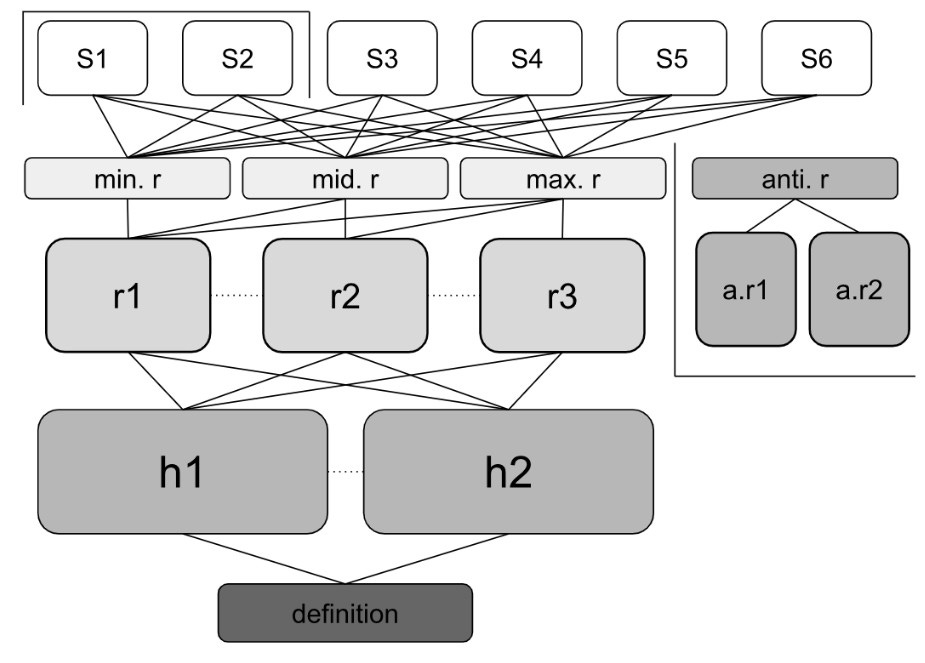
In part 1 an informational structure was compiled, where the inputs were subjective experiences and objective data points, and the primary processes were filtration and higher-order synthesis. Distilling down six scenarios and running what was left through a realist mesh the result was three theories, condensed further into two tangible and more importantly measurable and repeatable hypotheses, with the final output being a working partial-definition of the phenomenon now ubiquitously caught somewhere between the acronyms UAP and NHI.19 If you have not read Part 1, or have no desire to because you are already familiar with the myriad of potential patterns, the general premise of this case study is based around the axiomatic assumption: UAP are an array of abstract process and systems that conditionally feature:
1. hyper-agency (or hyper-agency-like) properties and behaviours that i) permit asymmetric influence over causal hierarchies, and ii) demand (e.g. due to the "five observables") to be thought of as existing in some space freer than the standard 4D Minkowskian (3 space + 1 time) we operate in (hence prefix "hyper-")and,
2. mythopoetic egregore (or egregore-like) properties and behaviours that permit i) a deeply meaningful relationship to our species sensemaking, decision-making, formulation of belief systems and ii) the ability to structure other agency, living and inert systems, and the environment organisationally (e.g. socially, institutionally, politically, geopolitically, technologically, spiritually)As well as axioms by which to approach this convoluted domain, the concepts of hyper-agency20 and mythopoetic egregores21 combinatorially serve as tools to build a stable framework around UAP. And we certainly need something stable to build on. Now more than ever the amount of disingenuous actors, overt and covert manipulation of information and artificially-generated data permeates more than just the subsurface strata of UFOlogy. And that is not even accounting for what legendary investigator and nuclear physicist Stanton Friedman called the “laughter curtain”.22 But this is all couched in obscure vernacular. Allow me to stop being so verbose.
The field of Evolutionary (or Ecological) Game Theory (EGT) suggests the first part of this definition (1.i) presupposes a true and physicalist “ecosystem” consisting of agency, relationships between agencies, and distinct environments across multiple scales. Here standard rational choice and decision-making can be mapped as an interlocking matrix of incentives, strategies and cost-benefit analysis across multiple actors. In most cases, (especially when factoring in Behaviour Game Theory (BGT)) such analysis would be focussed on the rational and non-rational decision trees of animals and flora, individual people and groups, tribes and megalopolises, organisations, institutions and companies to entire nation-states and even (perhaps at some point soon?) the total biosphere itself, or, conversely, completely artificially intelligent actors. Whatever the focal point, agency is usually constrained by space. Territory and environment then dictates co-existing, co-creating, coordinating, cohering and competing. Relationships are often expressed along a large spectrum, from the very subtle to the extremely overt, to the unique, loving and sometimes pitifully brutal.23 Aside from assigning doves and hawks, tools like EGT and BGT enable analysts to make “intuitive predictions” about “baseline expectations (i.e. evolutionary outcomes for a large, well-mixed population)”24 and enables the fitness of certain strategies, as well as the frequency of “strategy changing” to be established. Fitness is important, because in EGT it is modelled as the “payoff” that a certain strategy provides an agent (or group of agents) based on their interaction with (thus relationship to) other agents operating in shared environments. Whilst, for example, I do not think the phenomena behind the Our Lady of Fatima sightings distinctly cared about “winning”, it is undeniable that whatever it was used the momentum of cyclical appearances on the 13th of consecutive months in 1917 to expand in scale and outreach—an action which involves “attracting” other agency (in essence “rewiring” their psychitecture, specifically choicemaking) so that their “intuitive” rather than “analytical decision making” was the set controller in the agential loop. More on this shortly. Sovereignty—freedom of action—of course comes into play as well, but the decision to move to a specific physical and moreover mental location in order to experience something deemed worthy of spending energy when that thing is a slither of hope to maybe get a glimpse of another form of agency… that clearly denotes a sense of attraction; an agency that wanted to be observed. Wanted to be related to. Beckoned it on.
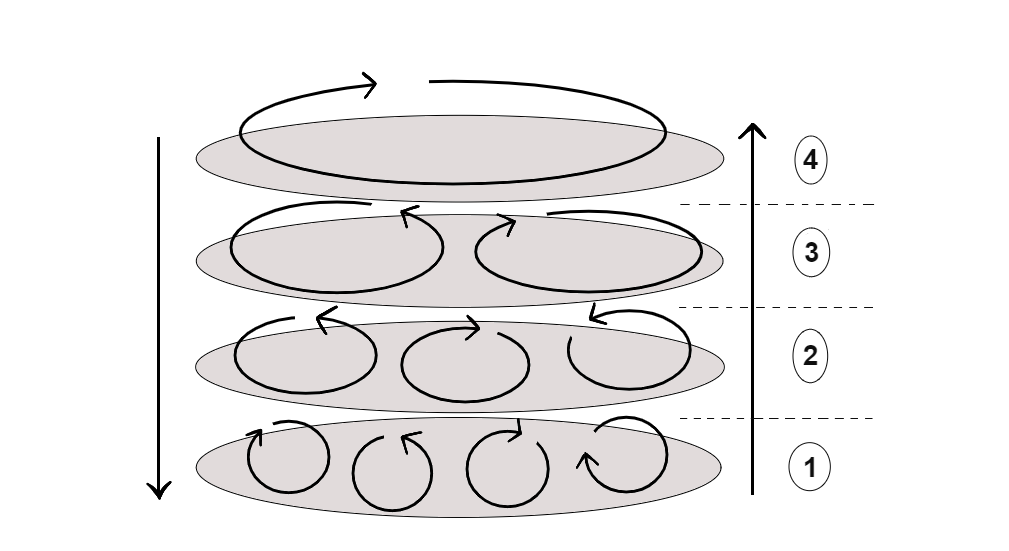
My own rendition of a panarchy
In a structural realist sense, the relationships between these agencies organisationally exist in a flux between panarchy (vertically integrated and mostly symbiotic), hierarchy (top-down and stable), and holarchy (embedded systems following certain protocols and operative regimes based on the structure as a whole). In EGT predator—prey and food—chain dynamics are often considered hierarchical, as related levels in a trophic order25 in the sense that predator goes after prey, the hawk after the dove, prey goes after smaller prey and energy sources, the dove after the insect, and so on, down in trophicity into other forms of life like flora, and bacteria. Energy thus flows upwards, from the most abundant (e.g. plant biomass) to the few (e.g. top predators). Selection pressure, the need to adapt, evolve, ultimately survive, flows downwards.
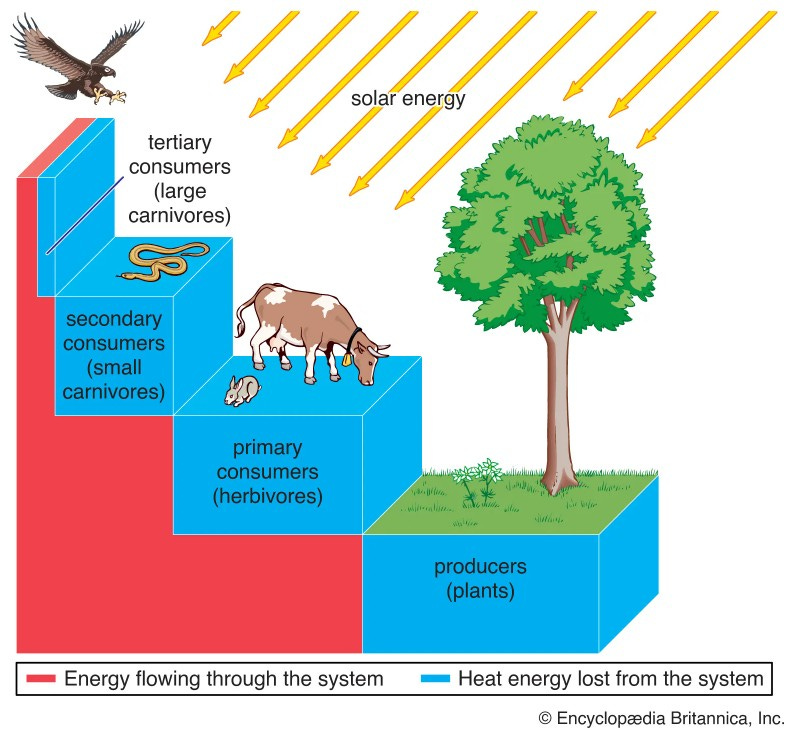
Accessed here.
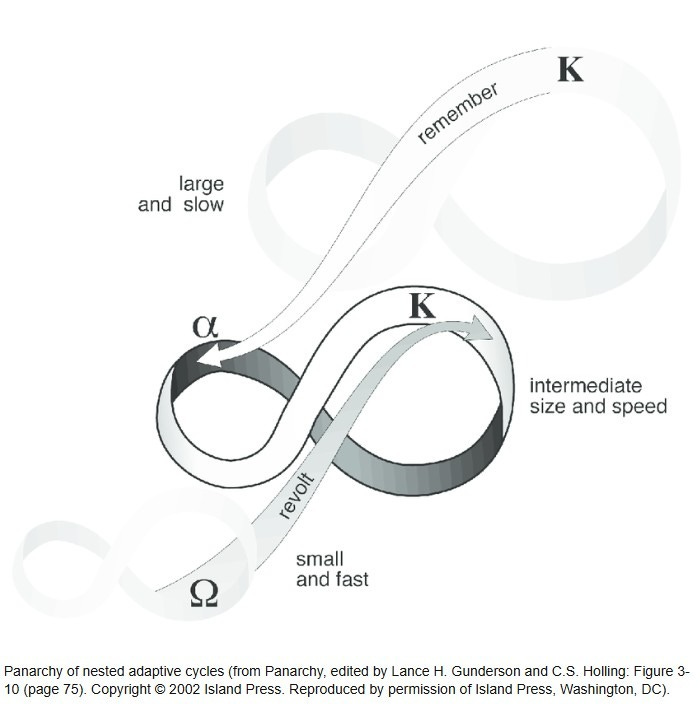
Accessed here.
In a panarchical sense time as well as space is added into the equation. For example, animal movement can change quickly (from minutes → days), while vegetation structure or soil processes often move more slowly (from seasons → years). Only a few forms of agency exist that feature scale-invariant influence. Since the atomic testing of the mid-twentieth century, our species counts as one. Derivatives of artificial intelligence may soon turn out to be another, if not already. To many a reader, however, attributing agency to cosmic meso-scale organisational structure and active patterns might be a step too far. But the only thing outside our scale of reference that we do not have immediate foresight over (removing the systems and agency we have created ourselves) is the imposition of the top-down solar and wider galaxy-range spheres of influence. Truly these cosmic spaces, structures, and objects, regardless of the question of assigning agency, have hierarchical causal influence over our agency and shared environment. One way to imagine this is that Earth could end quite easily from something “outside” of Earth’s sphere of influence. Something outside the biosphere. Outside the confines of the atmosphere. External to the total set of planetary-scale systems. That being said, the very nature of assigning a hyper-agency distinction is based on noticing thus interpreting a distinct form of agency that has been observed in a position of asymmetric top-down causal influence which presupposes influence across multiple spatial scales, effecting multiple, if not the net-agential total in a given environment. Thus, in a structural realist sense, across many scales of time and space, a hyper-agency would sit parallel to each slice of panarchy. Such a position makes it possible to converge upon and couple with a range of individual components and entire massive and complex systems across these scaling levels, accessing and controlling feedback loops, decision-trees and actions both individually and as a collective. I do not have the scope to discuss panarchys or holarchies in great detail now, but I have done before, and I most likely will do in the future. In the interim, there is plenty of great reading out there. That being said, the nature of the organisational structure itself (panarchy, hierarchy, holarchy, or another all together different structure) is dependent of space and time, and locally determined by both the topographical (terrain) of the environment and topological (geometric connections) of the agencies, their relationships, and spatial dimensions. According to standard game theory, the agency with the most control over the most agencies in a given space determines the (or has the most potential to) influence other agential interactions locally and globally. This is what is meant by “asymmetric influence over causal hierarchy” in 1.i.
Layer onto this the countless stories and verified “trained observer” reports of UAP moving in undeniably absurd fashion, the hyper-prefix takes on an appropriate depth of meaning. Namely (1.ii) the ability to move in unbounded directionality, at speeds and through transmedium environments (water, air, solid mass, ice) in ways that defy anything we know as possible, even with modern experimental technology. The possibility space surrounding the randomly fluctuating, thus highly distinct Brownian motion (akin to some subatomic particles) of many UAP can be thought about by an astute observation from Kastrup “That UAPs move in a manner akin to how we autonomously move our own eyes—so to scan and construct a model of our surroundings—seems to me to betray their immediate, seamless connection with the minds of their pilots.” UAP became a derivative of wholly mind-integrated technology. Another view, one I have previously explored in my series “Using biosemiotics to Commune with Alternative Life” and one subsequently shared by many people including Fellow of the Royal Astronomical Society Robert Temple and a distributed group of professional astronomers, astrobiologists, astrophysicists and other academicians from around the world, posits that organised forms of plasma known as plasmoids, may well feature agency in some unique capacity. Whatever the case, another observation that connects UAP to this prefix is found in the moment of contact, when a hyper-agency comes into contact with another agency in a shared environment. This interaction, what quickly becomes a relationship between agencies for however brief a time, often seems incorporeal to the lesser agent. Mercurial, as Harpur might describe it. There is something unequivocally unrenderable, it seems, when an agent encounters a form (or representation) of hyper-agency in their otherwise normative umwelt. The Comfortable bounds of their standard sensory system. It is so commanding, yet so foreign, that an intelligence like ours should encounter another form of mind not only like ours but uncomputably more dexterous, form-fluid, capable, and liminal. That for many is scary.26 That is the nature of what we have to take seriously if drawing realist conclusions from any of the prior theories and hypotheses featured in Part 1 about UAP.
The second element (2.i) involves minds rendering sensory data into reality. A process that calls for the lens of mythopoesis because myth and poetry are the primary source points from which the mind springs forth into what French philosopher Henry Corbin called the imaginal. Imagination is a downstream kernel of mind. But from our species-specific reaction to stories and narratives we can conclude the imagination has a massive impact on our decision-making, both at an emotive and meaning-making level. From belief to value systems. And just a quick superficial glance at the UAP question confirms absurd and highly strange narratives rule the space. Corbin's mundus imaginalis—partially drawn from Ibn Arabi and Suhrawardi traditions—is a stratum of reality that is more real than the sensory world and less abstract than the pure intellectual experience of nous. The imaginal thus gives rise to mythopoesis. This also seems to be the case for UAP. It would also suggest both UAP and mythopoesis exist “outside” our regular definitions of space and time. For example, agential systems such as these surpass generations, and also controls individual components and entire systems throughout its expansive sphere of influence. And thus, completing the loop, in this sense both mythopoesis and UAP fit into the framework of a hyper-agential process (one that exists outside of regular bounds of anthropocentric-biased space and time) that arises from the qualia of minds and enacts itself into reality. Borrowing a term from pioneering biosemiotician Charles Sanders Peirce, there is a triadic relationship at play here: mythopoesis ↔ hyper-agency (or hyper-agency-like) systems ↔ UAP. Imagined like:
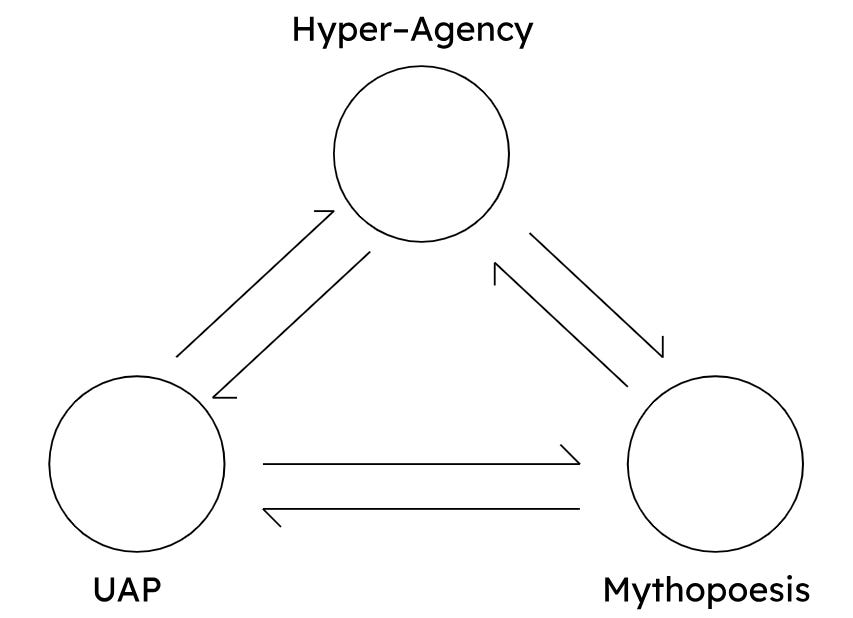
In a more concrete mathematical sense if we were to reduce our species down to a humble element, we would fit into the relationship as a d of mythopoesis. That is, as an element of the total imaginal system. Only central to the relationship in the sense that our anthropocentric nature is what connects us to this triadic system of feedback and control loops, acting in highly absurd yet deeply meaningful and profound ways.
To satisfy the conditions of (2.ii), we must assume a real-world entity framework, meaning that we must assume we are dealing with a distinct thing with its own unique identity and causal decision-tree. An “entity” is now integrated with a notion of hyper-agency by being used to denote a real, causally hierarchical organisational structure. Such a structure would be recognised in our umwelt, at least felt in some capacity, but because of the triadic relationship which suggests we are inherently connected to such a system through mythopoesis the primary way we engage with such an entity is mind-first. Because the imaginal is the realm of mind, one potentially helpful way of modelling abstract causal agency is through the “egregore”:
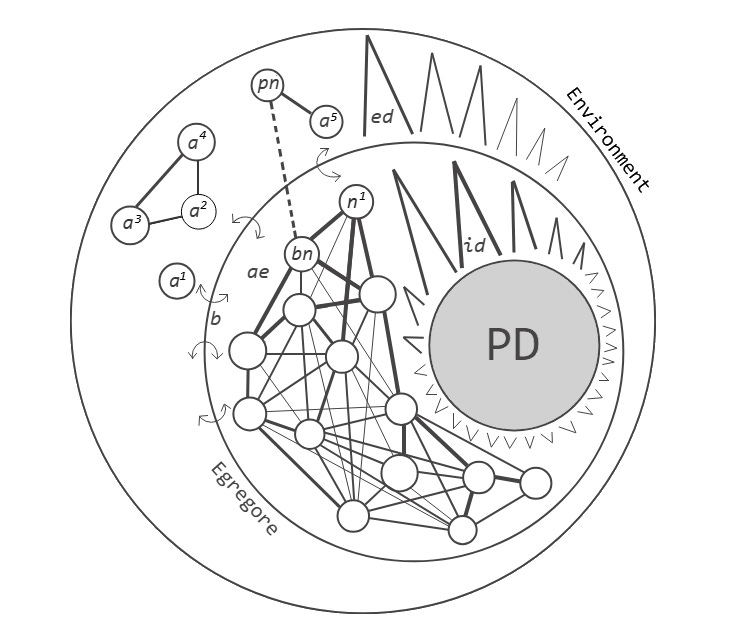
Permit me some artistic leeway; here is a superfluous rendering of the structure of an egregore— I like to visualise things, often by way of obscure Kandinskian arrays of concentric circles and straight lines. An affliction, I do admit. Context is given shortly, but the component key follows:
PD = primary driver of egregore
id = internal direction of choicemaking/control within egregore (strength indicated by vector size)
ed = external direction in environment (strength also indicated by vector size)
n = node (agent connected to the egregore network)
ae = total agency “internal” to egregore (total value of egregore network)
a¹… aⁿ = agency external to egregore (inhabiting the shared environment)
pn = indicating an “a” with the potential to become “ae” (connect with and become internal to egregore network)
bn = a “bridging node” initiating or overseeing the linking of “ae” (egregore network) to “pn” (potential node)
— = link between “n” in “ae” (thickness of link indicative of connection strength e.g. resilience to internal/ external change, resource/value/belief sharing, technological coupling, geospatial positioning)
- - - = potential link between “ae” and “pn”
b = boundary between egregore, external agency and environment (arrows indicate localised regions of interaction between the total egregore ↔ “ae” ↔ environment ↔ “a”) which remains in constant motion
Note: existence of external agential networks (e.g. social groups, institutions, religious sects, cults, companies, brands, political parties, gangs, territories, military—intelligence organisations) means egregore (ae + PD) can “attract” and “attach” to entire external network structures, indicating the value of “bn” within “ae”
Egregores branch off from the broader concept of thoughtforms as real entities like embedded institutions, religious sects and atomic cultural units. Whereas thinking about the latter might lead some minds up into the lofty and crisp plains of Tibet, to tulpas, the former leads us to mapping social relationships and agential organisation that include but is not limited to humans and collections of anthropocentric-adjacent agents and processes. Sticking with the former for a moment, (because lofty ideas are often valuable) tulpas were first recorded in the ancient Tibetan-Buddhist concept of nirmāṇakāya, and exist transjectively somewhere between almost fictional and neigh-on real. Always, at the very least, noticeably causal. Considered to be a Buddha who has taken on a specific quasi-physical form in order to teach on this material plane,27 many attest to the fact that under the right conditions and through enough ritual practice tulpas can be materialised by an individual at will to teach lessons and serve as a spiritual guide.28 For over a thousand years the idea that an “autonomous being” can be generated by pure thought has been seriously contemplated in Tibetan mystical traditions. However, as researcher Joshua Cutchin puts it, “Egregores are distinguished from tulpas by their collective, rather than individual, origin; their tendency to exist even when not embodied; and the subtle influence they exert on their adherents.”29
Subtle influences mean the silent hum of causation is attributed to something “unembodied”. The causative nature of the mind-matter connection is nothing new. Formative Causation, experimentally proposed by biologist Rupert Sheldrake in the 1990s, serves as a model for how information and consciousness are synonymous, both existing “outside” standard neurobiological models of the brain.30 Mind seems to effect matter in a multitude of ways. Nowadays, the question has opened up to “Where do minds exist?” and, as the distinguished synthetic biologist Dr. Michael Levin puts it in his aptly named blog thoughtforms:
“the distinction between real corporeal beings, and evanescent patterns within a substrate, is not absolute or binary but is a spectrum and very much in the eye of the beholder.”31
Levin less colloquially labels some of these agential substrates “active patterns” in the spirit of Platonic Forms but moving past the inactive connotations into a model where these active patterns undergo positive pressure; in other words: they are looking to escape. These forms, what really boil down to potential solutions to problems that embodied agencies in the torphic order of life face, are active patterns, maybe even ideation—forms of mind. In an interview with neuroscientist and philosopher Ian McGilchrist, Levin compares this to the phenomenon of “library angels”. When that book you may not even known you have been searching for pops down in front of you from the library shelf as if it wanted to be found, wanted to be embodied. And, according to Levin and his team, these minds may be everywhere, scale-invariantly. Now it is outside the remit of this article to get into the teleological arguments surrounding this particular train of thought but please note: according to the range of research, purpose and goal-directedness seem to drive these active patterns and their embodiment. For the purpose of this case study, goals, autonomy, purpose, and action are all featured drivers of hyper-agency and mythopoetic egregores as well. Suffice to say, intelligences from a range of basal spaces, across a range of scales, seem to be arising all over the place, and each have their own fundamental value system, goal structure, autonomy, agency and way of interacting with the environment and other agencies within it. From within the triadic set, humans are not a sole-source agency. As our instrumentation and frameworks get more refined, minds enacting agency might be found from our own cells and organelles to our planetary-wide ecosystems to collectives and hiveminds to unseen and even more abstract nooks and crannies all around us. Thus, while the spiritual conditions that underpin tulpas actually track with the cases analysed here, the use of “egregore” will go well-past the concept of standard tulpas or thoughtforms. It at once takes on a social-political, as well as mythopoetic, highly causal condition.
Without completely collapsing the wave on this point, we arrive at two fundamental questions:
Are egregores and hyper-agents fundamentally equivalent?
How much do agents recruited into egregorial and hyper-agential networks become collectively hyper-agential themselves vs how much of this asymmetric capacity is inherent only to the hyper-agential system alone?
I’m not good with numbers. But, if I were, I would attempt to write an equation for the following pseudo-mathematical rendering: the agential density (ad) in a given spatial unit (e) and time unit (t) is the sum of local agential capacities when normalised by volume and factoring in egregoric coherence and hierarchical asymmetry (ac)”.32 In more readable terms, ac can be thought about in terms of summing:
i) autonomy (how independently the agent can act)ii) goal coherence (how stable and directed its internal objective structure is) iii) causal scope (how many other agents/processes it can influence) iv) freedom of mobility (how freely it can move across environments or spatial constraints), v) resource control (attention, energy, money, labour, logistics, symbolic capital) vi) bridging capacity (ability to connect otherwise separate networks or scales)While Evolutionary Game Theory (EGT) does not specifically focus on “quantifying agency”, it does quantify game theoretic strategies. The age old hawk vs dove, or choosing cooperate vs defect, whether to forage or guard, or weighing the cost-benefit of signal vs hide. EGT is also interested in the frequency by which these strategies appear across patches of e, and ascertains the payoffs of ac as fitness consequences like energy gain, survival, and reproductive success. It follows that ac underscores ad, because components of agency presupposes a density of agency. Measuring ad per cell or in total becomes a derivative of how much game theoretic strategy is used per cell. Thus, to spatially analyse at once a process and relationship like ad in e, using ac as a set of anchors, a simple Cartesian coordinate system (x and y) can be drawn to affix the cellular spatial constraints, with potential additional quantities of space and time (z, w… n) inserted based on what is to be analysed. In a basic analysis of ad per cell, then, a simple causal hierarchy can be drawn, giving an estimation of the total hyper-agential density (hd) in e over t. Understanding when and where hyper-agency is present becomes important later on. Ascertaining hd becomes one potential method to do so. For now, when mapped cellularly, an egregores ad in e may look like:
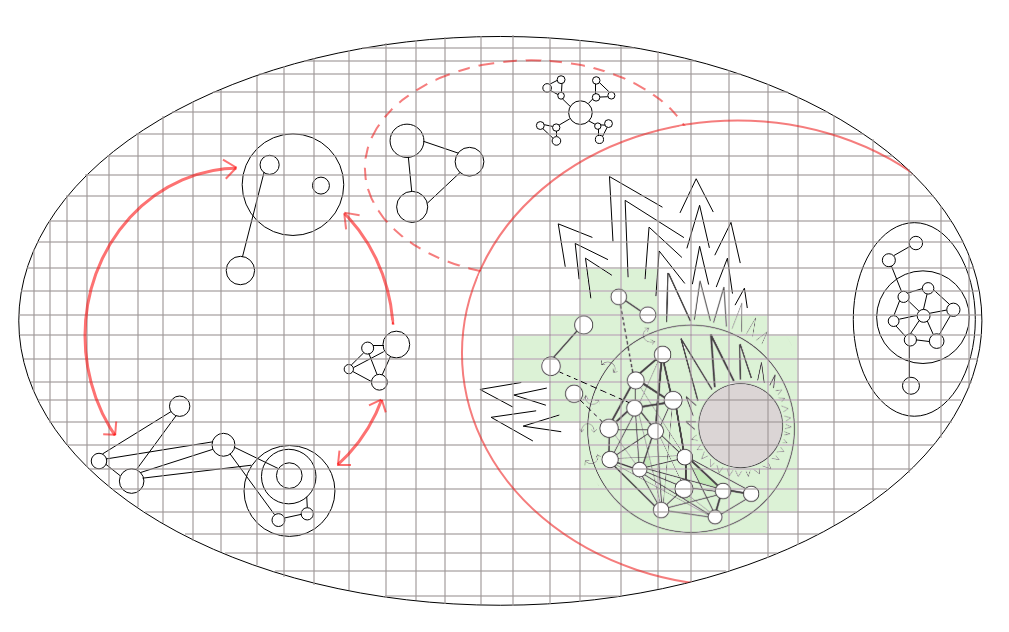
Note: red outline = sphere of influence (causal scope), broken red outline = potential sphere of influence, red arrow = feedback loops/directional relation between agential networks.
Thinking in terms of EGT, here the ad of an egregore is represented by the (66) green cells, taking up roughly 18% of total cellular space in e. Thus, an agency (in this case, an egregore) may occupy a relatively small fraction of space while still exerting disproportionate causal influence if the cells it occupies contain high-leveraging nodes (like bridges, bottlenecks, institutions, media, ritual sites, command hierarchies). Accordingly, total volume of ad in e may not correlate to hd in e. In other words, hyper-agency is not conditional on occupying the most space in the given environment. It is not as much contingent on spatial scale as it is dependent on the density of ac that indicates ad in patches of e. Real-world examples of this can be seen in case studies of the Catholic church in medieval Europe or the U.S. Federal Reserve in contemporary times. These organisations, essentially hyper-agential egregores in their own right, exceeded their normal upper boundary of agential scope and capacity, becoming asymmetrically causal. An analogy from marine-biology comes in the way of coral reefs. Despite taking up less than 1% of total marine space these agential structures host over 25% of all other marine life (agency). Attracting other agencies to join their structure, in essence, extending the reef ecosystem in terms of biomass, inter-species relation and food chain dynamics. Similarly, in our case, e represents the total potential space for ad to be located, which has to originate from some agency expressing ac. Egregores serve as a hub of agency. Providing a network through this shared agency can transmit and spread. Distributed at the fringes but dense at its core. By thinking about ad we are also obliged to think in terms of individual and collective agential spheres of influence. A boundary of influence that can have the same cellular-mapping applied, measuring (i) cells inside the sphere of influence, (ii) cells on the boundary, and (iii) cells outside the sphere of influence. By tracking spheres of influence we can track which agency increases or decreases in rates of ac over t. Other agents and agential networks can be inserted inside and outside the egregores sphere of influence, and can then be analysed to gather data on potential actions and relationships:
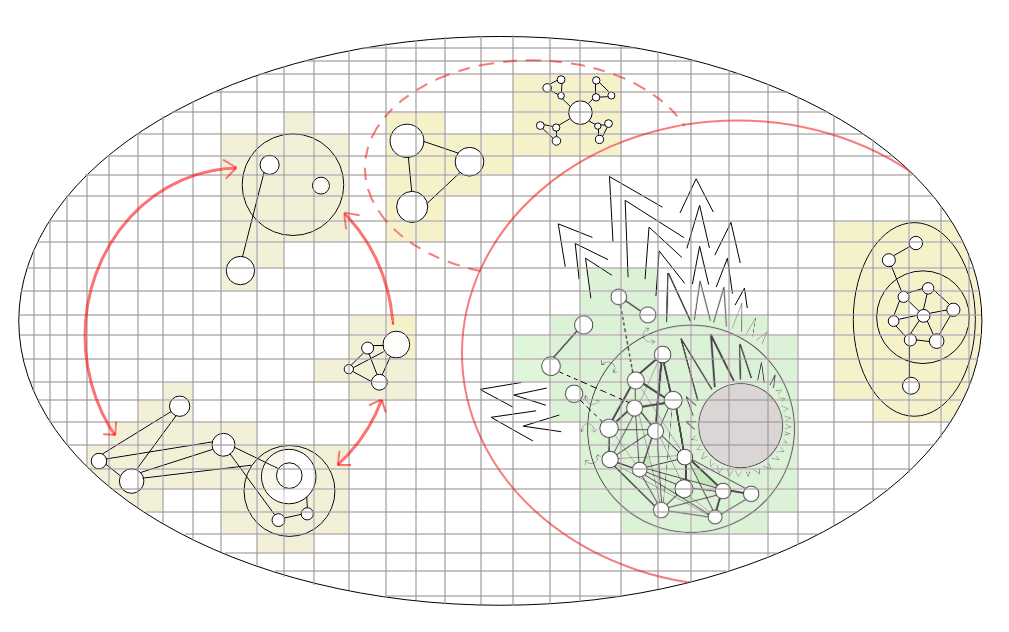
At this spatial snapshot, when compared with the other agency in e, the egregore accounts for 33% of total ad. Interestingly, its sphere of influence encompasses territory containing a further 27% (±) of identified external agency. If recruitment dynamics are assumed active (as the feedback loops and bridging nodes suggest) the egregore’s effective agential reach approaches 45% of all identified agency in the environment, without yet capturing the enclosed network currently in its sphere of influence, which represents the most strategically significant resistance or rival coherence structure in the shared space. Under such conditions EGT predicts either coalitional absorption (as is the case with the story of mitochondria and the eukaryotic cell, or the Standard Oil vs independent refiners embargo between 1870s-1882) or competitive bifurcation (as seen in the Protestant Reformation initiated by Martin Luther’s “95 Theses” or the Cold War “bloc” formations).33 The “payoff matrix” for the egregore’s next move is determined by whether the bridging cost of absorbing the enclosed network outweighs the causal gain. In any case, if having to assign a hyper-agential density (hd) to e, it is clear it would be assigned to the egregore. Another interesting potential dynamic that is expressed in the above model is the fact that, despite the most advantageous network structure being located within the egregores direct sphere of influence, based on its own teleology it has orientated itself (including its shared mindspace thus focus) towards connecting to the smaller agential networks in the periphery of potential influence first.34 In EGT such behaviour is known as “cascading thresholds” and such a strategy is often not just most optimal but largely the only option available. For example, the specific network structure of the smaller agents might be more advantageous to recruit in the near-term, actually making the acquisition of the resilient or rival network less costly in the long-term. Behaviour like this also indicates a level of analytic decision-making. At the most basic sense, this process can be thought of through Cybernetics. The study of how systems control, communicate and disseminate information across different internal components and scales can be adapted from “OODA-RUDE loops”:
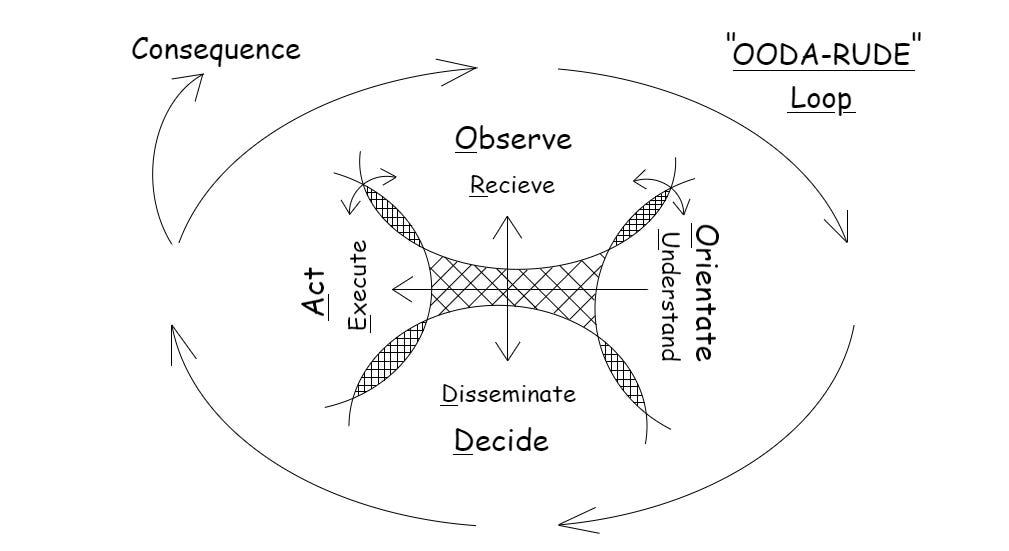
Egregore-like entities are organisationally structured in such a way as to maximise simple positive and negative feedback mechanisms between agencies within the egregore unit. By incrementally accruing these “simple” command components within the total control system, the total unit itself coordinates, orientates and maximises resource acquisition (including attention, action, financial scope, energy acquisition, and labour output). Egregores are like a frame that fits around the OODA-RUDE loop systems of an agency, and uses this to manipulate and move that agency in a way advantageous to the continuation and propagation of the net-egregore network. All of this is predicated on the notion that egregores are adept at connecting agency together because they are highly emotive. That being, in a basic unit of mindspace, represented by the “psychitectural circuit” below, egregores enter at the level of emotion, and using a mechanism somewhat akin to rheotaxis push up the sensemaking stream to enter into an agent’s belief systems and goal hierarchies. In this way, egregores are highly memetic and attach themselves to the source of action. With action an inherent feature of agency, this helps explain how egregores gain access to, control and enact action on the behalf of distributed agencies. By inherently having to inhabit an agent’s mindspace to exist, they become in essence psychitectural control systems, which subsequently have an influence over emotions and decision-making and thus real-world consequences in an environment.
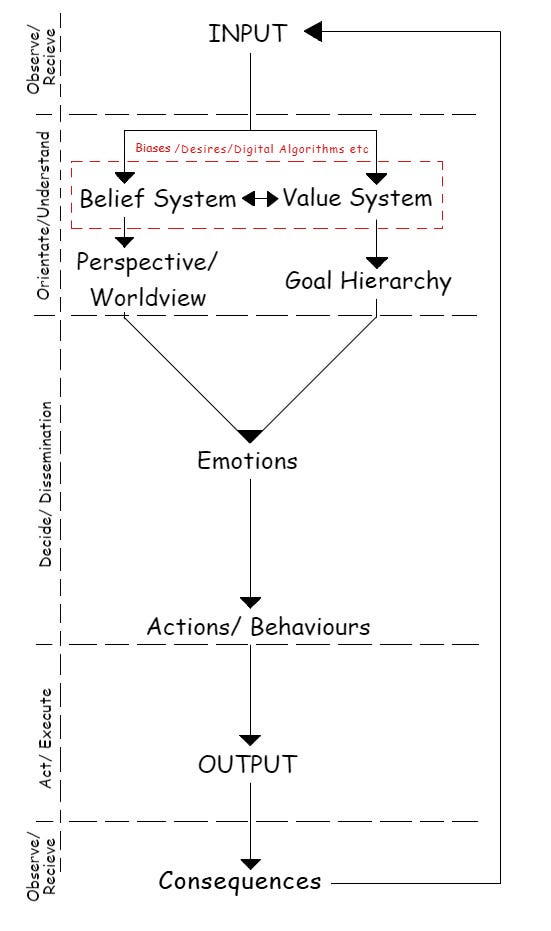
Pretty self-explanatory; this psychitectural system is based on the work of software engineer and practical philosopher Ryan Bush.35 The corresponding cybernetic OODA-RUDE loop components added for comparative reference.
In no way am I trying to diminish the beauty and aesthetic wonder of mind to a bunch of simple traceable components in a conceptual circuit. Only, I need an anchor in the way of conceptualising minds, because where we are going later: somewhere chilly between mind and matter, is fairly uncharted territory.
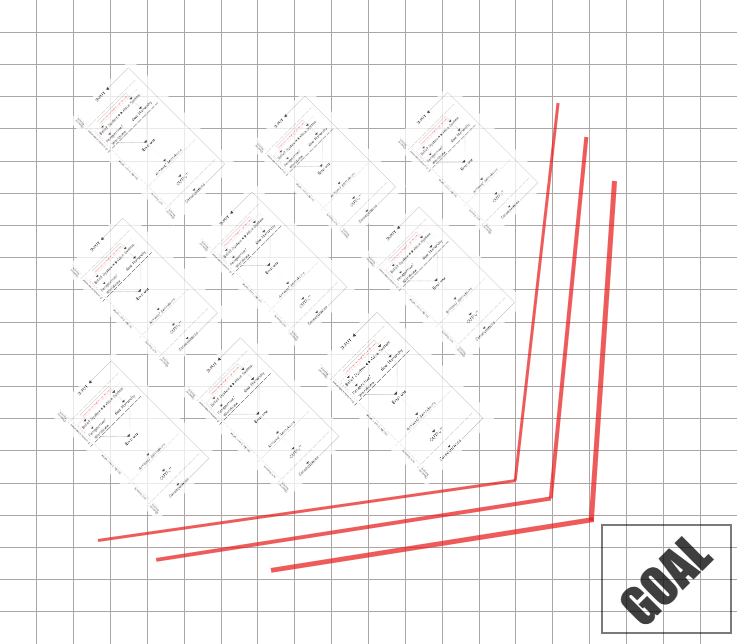
Not to sound trite, but Life is all about what and where you put your energy into. One core idea from EGT is that the fitness (the rate of success) of a strategy depends on how common or rare it is within the population. This is because evolution is partly based on what happens when agents repeatedly allocate limited energy across competing “moves”. Following this the strategies that convert the least energy into most beneficial outcomes (commonly maximising towards survival and reproduction) become more common. Nature stabilises patterns of energy investment that perform well against the already existing strategies in a given ecosystem. The energy systems of agents heavily depend on the action of other agencies. Strategic agency encourages strategic agency. As well as the environment itself. Regardless, the variable fitness in EGT becomes dependent on more than just how good a strategy is: how good is it given the mix of other strategies around it? This means fitness is frequency dependent. Different agencies represent different conditions. Different conditions represent different strategies. In a given space, the frequency that agency deploys strategies dictates not only the successful energy allocation of all agencies, but species morphological variation. By allocating function and patterns of personality to the age old “hawk vs dove” metaphor, the hawk becomes the aggressor, developing stereoscopic vision, predatory, fast, lean and lethal, whereas the dove is lighter, agile, graceful, laterally-sighted, defensive, focussed instead on attracting a mate via vibrancy rather than violence. I think what makes the egregore structure so successful is the fact that it simultaneously couples “hawk and dove” like agencies together into one coherent network aligned to the same goal. Instead of:
hawks vs dovesan egregore produces:
hawks
────
doves
What is an egregore if not a collection of psychitectures aligned towards the same goal (or ideal or idea)? Egregores aggregate resources across the many mindspaces they inhabit. Whilst previous binding mechanisms may be present amongst these minds (like political or moral values, social contexts and networks, shared history and familial lineages), many egregore networks start from a basic of neutrality. However, as was the case with the egregore of European natural philosophy, which generated convergent outputs from otherwise disconnected nodes like Newton and Leibniz, Darwin and Wallace, Bolyai and Lobachevsky, or how religious pilgrimage sites like Lourdes, Mecca, the Ganges at Kumbh Mela draw individual agents from entirely unrelated worlds into a shared ritual space and collective affective state. Egregores seem to possess the ability to reach into otherwise disconnected lives and draw them to the same point in space and time. Many of the agential network nodes are randomly distributed and only connected via the larger egregore network itself. However, many of those mindspaces within an egregore network do not even perceive the control that is being exerted on their psychitectural systems. Why? At first principle levels, our minds have the capacity to form mental models. In this sense what appears somewhat irrational—the attribution of causality to abstract forces—can be classified rational. Hyperactive agency detection disorder (HADD) mentioned in Part 1 is evolutionarily beneficial because over-fitting agency (traditionally spirits, ghosts, gods) means avoiding under-fitting potential predators. Aligning oneself idealistically to another agency, orienting towards a collective action, has high fitness. It often pays off. But that collective, for lack of a better term, entity, is actually a conglomerate of disparate frames of reference where interpretation, observation, participation and experience (IOPE) shape the individual psychitectural landscape. Let me ask you this: if we see agency all around us, would we easily distinguish that we are in fact already contained within a form of hyper-agency? Would our regular umwelt of normative recognition and relationship with the world make that evident? Personally, I am not so sure. And that is exactly how egregores function. Believing in agency external to oneself, aligning oneself to such agency, and being completely controlled by that agency remain three relations not too far removed. That is how humans function. Distinctions we will have to be careful not to confuse later in this series. Separated statistically by a Markhov Blanket. Spiritually by far less.
First, the fundamental condition evoked by an egregore-like entity (which is just a more eloquent way of saying “a causally hierarchical thus asymmetric organisational structure”) is that of “collectivity” or the formation of “collectives”. Groups. Atomic, cellular, panarchical, holarchical. Egregore equates to minds connected to other minds. Described above as “bridging capacity”. More aptly described through network theory as the linking of nodes: agency—agency. An egregore becomes a “binding mechanism” across which many disparate minds (agencies) can connect, align and cohere by sharing resources, time, attention, and action despite their distinct mythopoetic, spiritual, religious and sometimes even political and tribalistic basal conditions and experiences. If the above was applied to Metcalfe’s Law, Reed’s Law and other Power Law Distributions, would this bode well for discrete analysis, where quantification holds as much value as pontification?36 It is interesting to note that, following these network scaling laws, the agents (the nodes) and their bonds (links, initiated by the agency within the egregore) can increase their individual and collective agency so much so they can have massive causal impact on the local and global environment. Collectively, they become “hyper-agential”. Previously, Part 1 defined agency37 and hyper-agency38 and now we can see that hyper-agency also requires a combinatorial array of layered cognition → intelligence → analytical decision-making → sensemaking → intuitive decision-making as well. Being at once potentially disruptive to other agencies, making it dissipate in space over time, but conversely is also able to recruit more agency into open and closed agential networks, making them very similar in principle to the modern notion of egregores. Thus, I must backtrack slightly. Despite previously stating that assigning hyper-agency to an agential network is not contingent on the scale of said agency in a given space (e) but instead the density of agential capacity, egregore coherence, and asymmetric causality (ac) in e, it must be pointed out that one of the primary signs of both a successful egregore and hyper-agency is an ability to exist in a decentralised fashion. Paradoxical as it may seem, despite the primary driver remaining a centralising constant in the mindspaces of the agents in the egregore network, collectively orientating their attention and action, these agents may be in some cases highly geospatially dispersed, especially given the ubiquitous nature of social technology in today’s current climate connecting otherwise disparate minds across vast decentralised networks (e1→e5).
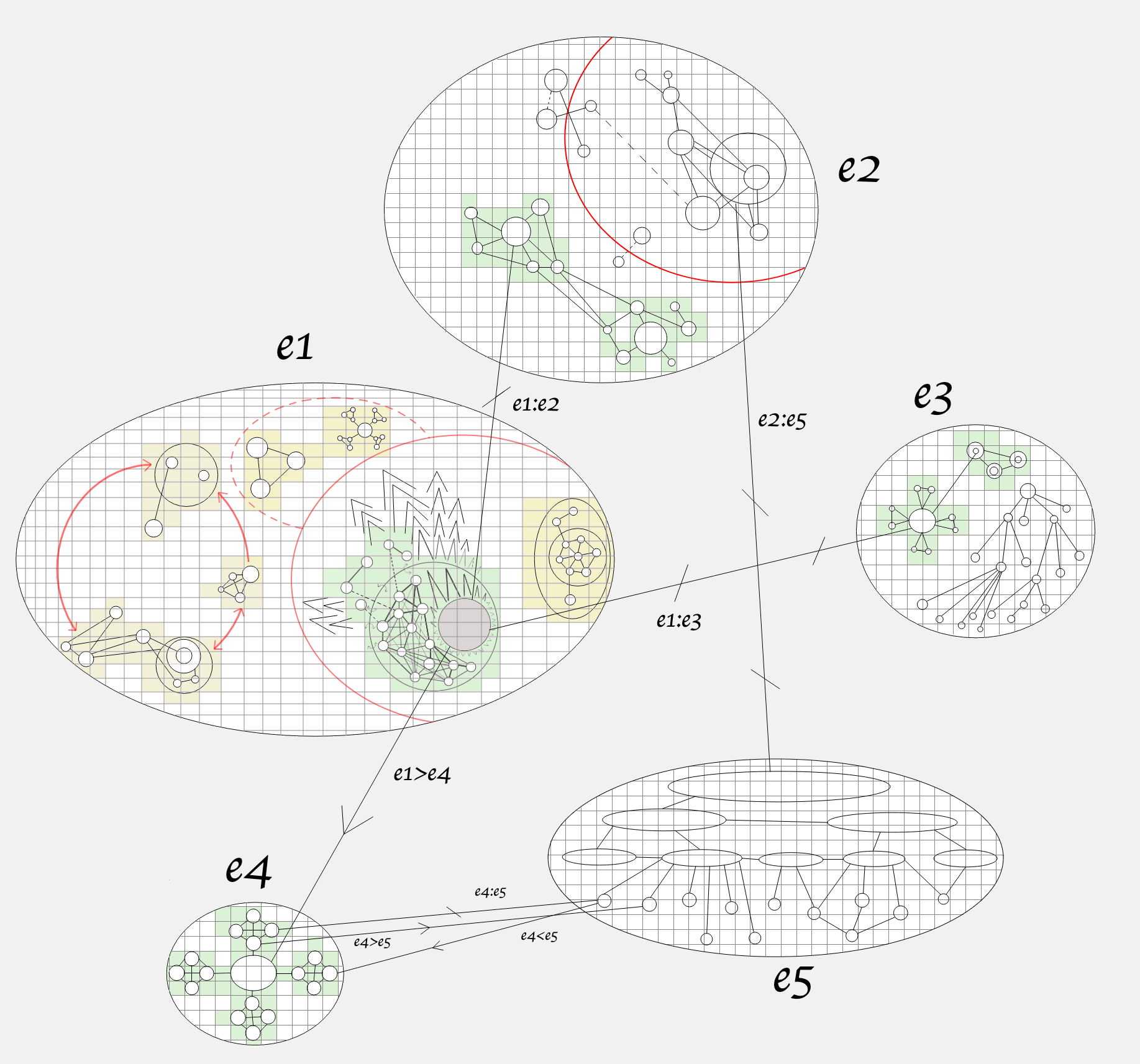
Merely a heuristic by which to think about different forms of agential networks across space and scale by representing links between them across vast spatial scales (e.g. one country to another, or continent to continent).
Each network is like a spatially isolated chain of command, or more apt: control. Remembering that these are highly agential, autonomous, and decentralised organisational structures, where resources across both physical and technological spheres of influence migrate in great abundance, is that not what is at the heart of both hyper-agency and egregores? The ability to quickly mobilise your parts and cohere to some fluid state by which action can be impressed onto the environment, locally and globally.
Beginning with the second, permit me a mechanistic bioanalogy. I know a guy. He’s a fungi. The more than 1,500 different mycelial networks that have evolutionarily adapted to enter the body of different host systems, in most cases insects ranging from carpenter ants to cicadas and spiders to flies and caterpillars, once inside, take control of the “choice-making” and “decision-making” and thus “consequential actions”. Metaphorically equivalent to portions of the psychitecture and mindspace.39 Over billions of years these mycelial networks have evolved “small but incredibly strong structures” resembling drill bits, used exclusively as “entrance mechanisms”. These biological boring structures are called appressoria and they are used to punch through the hard outer shell of arthropods, the unfortunate host system in this scenario. These fungi, now less fungi and more simply intelligent, adaptive systems embodied in the medium of mycelia that have learned to drive other systems, only become hyper-agential once they are collectively positioned within the control system of the host. The entire system and process is a classic example of the sum of the whole is way more than the sum of its parts. But even moreso, the recurring pattern of fungi entering and controlling host systems happens across a massive geospatial range—in fact: the entire biosphere writ large.40
That being said, do not mistake me: the two cases discussed next in this series: Our Lady of Fatima and the UFO of God, should be as far-removed from any parasitic or virus-like connotations as possible. Stated plainly for the record: you can make the case that according to first-hand testimony events in both of these cases (that we still study to this day because of their large impact on the world) were ultimately mutually beneficial and net-positive. Equally, that being said, this bioanalogy does not earn its keep through the element of “intent”. I am not talking about adding meaning to the information or data. Instead, through observing behaviour of high-order agency, if not hyper-agency at different spatial scales across different substrates, just like we see all over the world with mycelia, and also just like with model with egregores and hyper-agency, we arrive at the description of forms of embodied yet dispersed, almost diaspora-like agency that has the ability to simultaneously be i) a force, an active pattern or a process which has the capacity to organisationally structure groups of people (or other agencies) across space and time, enforcing collective action not possible at the scale of individual, and what, for lack of better wording, is ii) an underlying driving force, or a “primary driver” that directs this collective set of agential motion, action and goals from the core of the egregore ideal outwards into material reality.41 In this sense, the bioanalogy to the fungi network holds: the mycelia form a network of cellular organisational structures called hyphae which, much like the agential network internal to the egregore, is comprised of ever-oscillating network-like structures, the collective agential capacity guiding the concurrent form and function, working to causally influence a range of host systems, which when entered and enveloped to collectively exhibit similar behaviour patterns, specifically movements thus actions across regular dimensions of space and time. These networks move host agents into positions to optimise the transmission of the control mechanism. The driving system. Because egregores manifests as cognitive patterns, and cognitive patterns are fluid, it should come as no surprise that an egregore can consistently shift form and, excuse the pun, take on a mind of its own. Although, describing this as only one mind would be factitious. An egregore creates a network of minds. Of anthropocentric minds. Because of this in-built diversity, even though these minds follow the same directions (to achieve the same goal), this collective mind still fractures, fragments, and becomes, in essence, a set of split personalities. What maintains the egregoric stability and momentum over space and time is a strong primary driver. Because people are usually the agent being organised and manipulated by an egregore, the primary driver is often what evolutionary biologist Richard Dawkins labels memes. According to legendary ethnobotanist Terrence McKenna, memes are “the smallest unit of an idea that still has coherency”. In bioanalagous terms Mckenna compared their relationship to ideas to what genes are proteins. Memeplexes, otherwise thought of as “self-replicating units of culture”, exist in the spirit of philosopher René Girard. These units are mimetically passed on person-to-person, spreading, often through imitation for some social status or incentive-based dynamic, mind-to-mind. More infamously this manner of transmission, host-to-host, is what led Dawkins, and in-part McKenna too, to view memes as “mind-viruses”. Coupled tightly with the more recognisable psycho-social phenomena we call “ideology”. Not all the time, but often memes are brought about in times of shared struggle or extreme and collective change or unrest, the specific nature of the egregore, what form it takes, how much causal influence it exerts on the environment and other systems within it, is determined by the nature of the primary driver steering it. Get at the driver, understand the egregore. This could be a causal reaction to an event or experience. Egregores formed in war-torn dynamics will make people direct their collective attention, resources, and action to try and unite, resist and rebel the invading force. Egregores formed around shared traditions and beliefs inspired by a perceived sacred or transformative power will focus collective action around hierophanic, spiritual, mystical, theological and divine rituals and actions. From political and religious movements to folklore and science, whatever the case, egregoric action is synonymous with collective action.42 And, because this often percolates up through the medium of individual ideation and thought (I am trying really hard not use the term “consciousness”, although Professor Donald Hoffman’s use of “conscious agency” is perhaps as close as I dare), when talking egregore we must talk also mythopoiesis. And yes—that is a deliberate misspelling. Whilst we have been thinking about the meeting of mythos and poetry and its relation to the imaginal via traditional “mythopoesis”, perhaps another reframing of the etymology to mythopoiesis can offer new insight into the space of the imaginal. Turning away from the intangible “poetic” connotations “-poiesis” is the Greek for “create” or “produce” and thus mythopoiesis is instead juxtaposed with bio-based processes like allopoiesis (where systems build something more than themselves, like other systems) and autopoiesis (where a system is self-generating, building itself). In the sense that egregores perpetuate mythemes (the basic building block unit of mythos) often through the imaginal plain of poetry (it is still connected), egregores can be considered a distinct entity with the ability generate mythopoetic systems like beliefs, memes, cosmologies, philosophical and socio-political ideals, legends and lore, sometimes even developing distinct languages and other symbol sets. When powerful entities enact mythpoiesis it can be for a number of reasons. States act this out on the geopolitical stage for a number of game theoretic strategies. When an egregore or hyper-agent unfolds self-generating and self-driving mythos it is often to: i) to maintain causal asymmetry, ii) as an unintended by-product of their relationship to a) other agency (like us) and b) the environment, or iii) both of the above.
What about when the primary driver is not a traditional meme, however? Nor a collective struggle? What if an egregore is driven by an abstractly embodied hyper-agent? These distinctions are fluid of course. The mechanisms through which we interpret these phenomena is not actually contained by these arbitrary labels. As a means to inquire, however, the definition said previously states that, however subtle, the existence of “influence” suggests an egregore (or the entity driving it) has to be high agency. One pertinent example of this shoots out at us from the murky history of military—intelligence organisations. Intelligence agencies like the CIA (which are hyper-agential in everything but name) actually drove their own form of egregore into modern society in the middle of the previous century. Using networked agency to further their own causal influence, one has to look no further than the case of the CIA-generated Congress for Cultural Freedom in the 1950s, created as a strategy to promote the “non-Communist left” as a foundation for political operations against the USSR during Cold War-era geopolitical maneuvering. The primary driver in this case being the CIA under by Cold War competition and distinct human agency. However, in the spirit of pushing the needle past conventional socio-political contexts and espionage, we will soon analyse first-hand testimony of embodied egregores whose primary driver is not so clear-cut and may well turn out to be some element of abstract, quasi-embodied hyper-agency. Moving past purely literal, material, psycho-social projections and into the realm of an embodied intelligence with capacity for real-world action the “UAP question” has now become: what if the primary driver of the egregore is a non-anthropocentric mind?
When reframed together with the UAP axis, this series is an attempt to build upon standard UAP models in order to move towards something more integrative of rationalist and structuralist approaches, yet remaining within the necessary metaphysical and mystical traditions; why? Because the phenomena demands it. Using a dualistic approach, both hyper-agency and mytho-poetic egregores act as branching conditions rooted to the same trunk: one route modelling highly competitive ecological and social-political possibility spaces, the other turning skywards towards phenomenological experiences, hierarchical and asymptotic causations. Yet, less we forget, both stem from, align to, and unify under the definition and thus analysis and interpretation of UAP. Pluralistic approaches to UAP-studies present a new norm. UAP is an array, after all.
To study this niche yet fundamental aspect of reality, two case studies have been chosen. Admittedly more by synchronistic chance than by deliberate consideration—a recurring theme in my research into high strangeness.43 And, for what it is worth, it just so happens Lady Luck positioned me in the right place at the right time to connect me to some very intriguing first-hand testimony from one of the two chosen cases. In the form of a great-granddaughter whose direct lineage consists of two primary experiencers. What did they experience? Well that is the crux of this entire matter. As a placeholder: a phenomenon situated somewhere between “God” and “UAP”. When studying a case so highly renowned in both mytho-theological and UAP circles it is not often one gets to say that there is a chance what is about to be said has not been publicly documented before. Well, I won’t jump the gun. All I’ll say is what comes next is straight from a proud relative, and it sits atop a legacy that history wishes not to forget. So lest not forget Our Lady of Fatima. Our next turn.
Clarifying what is meant here, the “UAP Question” consists of a range of scenarios that get turned into theories that get reduced to hypotheses, specifically concerning the fundamental question: do “non-human intelligences” (NHI) exist in a concurrent relationship with our species? From this, the condensing system of scenarios → theories → hypotheses unfolds. This was outlined in Part 1. The conclusion, if it was not evident already by the title, is that whatever the phenomena/phenomenon is, it displays characteristics of what modern evolutionary science, sociology, and cultural studies label hyper-agency and more colloquially “egregores”.
The “reality” of the UAP question, which can be recursively dissected into constituent parts, one such process outlined in Part 1 of this series.
Even if we use the latest electron microspectrometer or the James Web Space Telescope the technology has come from our species. It is based around what we can interpret, observe and experience.
Timestamped video link of the interview (quote from James Fox starts 2:44:58):
Whilst in another interview with a NASA-affiliated astrophysicist Eric Davis and mathematician and theoretical physicist Eric Weinstein, Michels questions the integrity of AARO’s overall goal in the UAPsphere, suggesting the special access program (SAP) may act more like a “steady-hands” shock-absorber than a device for seeking truth regarding the UAP question.
Video link to the interview here (time stamp: 2:36:15–2:37:45).
Paraphrasing risk analysis expert Daniel Schachtenberger, we are a species great at creating technology but not great at wielding it.
In the sense of relations between points in structure.
Italics added for effect.
Note that the substance of which—charge, particles, waves, strings—is still a debate because we fundamentally cannot see it.
Specifically it imagines islands of minds, layered down to what Kastrup labels “universal phenomenal consciousness”: where each conscious agent we perceive (and equally fail to recognise) around us, whether we perceive it or not, is like an “alter” poking out from a sea of conscious action, the islands becoming dissociated parts of the entire whole sum of conscious isness. Islands largely segmented but connected at their root to bedrock phenomenology. Through this connection, once binding and demarcating, the mind slips.
Preceded in the 1970s (up to 1995) by various code names like Scanate, Grill Flame, Center Lane and Sun Streak.
Gascón et al, 2023, Follow‐up on the U.S. Central Intelligence Agency’s (CIA) remote viewing experiments.
Yes, that is a thing. More impressively, it is an app. A free one. Which you could download and use at anytime. Co-created by one of the world’s youngest trained remote viewers, Adam Curry. And no, this is not a paid promotion. It is a genuine endorsement. Go try it now. You have literally nothing to lose.
Not to say this phenomena was only noticed and existed within ancient Greece alone: a similarly active pattern is recorded at some point in most global cultures, from Roman genius/lares (personal birth-spirit and household guardian), the Mesopotamian lamassu/shedu (threshold-dwelling human-animal intermediary), the Aztec nahual/tonalli (companion animal-soul tied to sacred calendar and cosmic destiny), the Hindu ishta devata (personally allocated deity bridging individual and transcendent), the Yoruba ori (pre-birth inner spirit carrying unique destiny and divine intercession), the Shinto ujigami/kami (ancestral guardian tied to place and lineage), and the Islamic qareen and Buddhist yidam (spiritual double and tutelary deity accompanying each person as guide between the human and the divine).
Akin to the ancient Greek process of kataphasis, where one hopes to ascend towards a symbolic and mystical space by building upon all of the knowledge, ritual and wisdom that came before.
Akin to the juxtaposing ancient Greek process of apophasis, where one denounces everything outside of the self to descend inwards, gaining all that is necessary simply from the act being.
I have previously written about the structural dualism of “inside-outside” here.
But, in a more poetic sense, it is something like the Heraclitean philosophical metaphor of “flux”: like when standing in a river you can move away and return to the exact same spot but never will it be the same. Relations, thus structure, are fluid. Space flows. Everything, all spaces, are in constant flux. Quantum Field Theory, one pinnacle of anthropocentric observational-refinement, supports this being the case. And in terms of minds visiting different spaces, this constant flux, like a perpetual flow instantiated by the whitecapped roiling of waves, takes with it the memory of what was “outside”. This forms a paradoxical inability to complete the Orouboric loop and couple the successful transcendence through a boundary to the “outside” to the successful return back with any discernible notion of what the other side was/is truly like. That is why most records of it from the past are captured mytho-poetically.
As a brief summary: Wrangham’s Goodness Paradox states that our species tends towards a process of self-domestication, whereby we select for “proactive aggression” and select against “reactive aggression”. From collective tribal times, the group members who exhibited erratic and overtly aggressive behaviour were submitted to early forms of capital punishment, banishment or death, by other group members who were able to organise, align, and form a sub-group to proactively go after this individual. A sub-group that takes some form of action on the behalf of the perceived greater good, or for some other game theoretic reason. Chimpanzees have infamously been known to exhibit similar prosocial and proactively aggressive behaviour, but they are far more reactively aggressive than us. We diverged from the chimp lineage in this regard. Evolutionarily, this propelled our species forward. However, this is where the paradox comes into it: our foundational justice systems, jurisprudence, law, and legal theory generally weights on selecting against keeping individuals who are reactively aggressive in society. This can only happen because other societal members can aggregate proactively aggressive personality traits to coordinate, cohere, plan and execute higher-order decisions. This has subsequently caused our species to self-domesticate. An evolutionary trait seen in other animals, including bonobo chimps, Belyaev’s silver foxes, and dogs, whereby a species undergoes morphological changes like reduced skull robusticity, smaller teeth, changes in adrenal function, reduced pigmentation, docility, and sometimes sexual dimorphism (less distinction between male and female). Another potential characteristic comes from the process of paedomorphosis where the concurrent adult population exhibiting features akin to the young of their ancestors. In essence, this makes the generations in this evolutionary period look more “juvenile” and less “wild”. Changes in adrenal function turn out to be important, because these are determined by cellular networks called neural crests. It turns out selecting against reactive aggression, whether by removing aggressive individuals from society, or by selectively breeding calmer animals, inadvertently selects for individuals with slightly reduced or delayed neural crest cell activity. The wider point being these changes are causally influenced by internal selection pressure, rather than strictly external environmental adaptations.
UAP could mean Unidentified Anomalous Phenomena or Unidentified Aerospace and Submersible Phenomena, and NHI means Non-Human Intelligence. Formally this phenomenon has been labelled UFO, flying saucer, alien, extraterrestrials, and otherwise more recently as ultra-terrestrials and extra-tempestrials. This is to do with the domain of time and spatial dimensionality, a concept that will be central to this case study.
Common examples of things modelled using the hyper-agent status: presidents and heads of state, monarchs, CEOs, religious anc cultural leaders and icons, “elite” family lineages, plutocrats, Big Tech.
The “mythopoetic” part we will get to in a minute, but for now the egregore part can also be thought about in terms of: social movements, religious tradition and belief, social technology, political doctrines, family values and Big Tech.
See: SYMPOSIUM ON UNIDENTIFIED FLYING OBJECTS: HEARINGS BEFORE THE COMMITTEE ON SCIENCE AND ASTRONAUTICS U.S. HOUSE OF REPRESENTATIVES NINETIETH CONGRESS SECOND SESSION, JULY 29, 1968, P. 186 & 209 and Mustang Daily, Vol. XXXIV No. 32, May 22, 1972.
I love poetry and anecdotal quirks as much as the next person, and my choice to focus on Game Theory here is not some bid to objectively shave these experiences down into a cold, hard, lump of data. Not my intention in the slightest. Just, when hyper-agency is involved, it is best to start with a foundation of game theory to at least try and feel what direction we are heading.
Tarnita & Traulsen, 2025, Reconciling ecology and evolutionary game theory or “When not to think cooperation”
e.g. Producers (Level 1) ↔ Primary Consumers (Level 2) ↔ Secondary Consumers (Level 3) ↔ Top Predators (Level 4+)
Especially if your job is to protect billions of citizens from outside threats. Not pointing threat accusations at UAP; I am saying that if it is your job to do risk analysis and prepare for all potential outcomes, having something clearly asymmetrically agential, thus autonomous, and neigh-on impossible to pin-down, even if this system was not explicitly threatening, you would probably not be doing your job properly if you did not at least try to prepare for the worse-case scenario. Which, many whistleblowers say, has been done countless of times, especially when it comes to UFOs and Nukes (shoutout Robert Hastings).
Because of the enlightened state that the appearance of tulpas are associated with, they are also associated with lessons to be learned.
The story of Alexandra David-Néel as related by Joshua Cutchin, Fourth Wall Phantoms, 2025, P. 72 (Kindle ed.)
Joshua Cutchin, Fourth Wall Phantoms, 2025, P. 76 (Kindle ed.)
Sheldrake’s experiment suggests that when one system learns and achieves a novel skill, property, task or goal, other systems of the same kind will begin exhibiting this same novelty, statistically faster than before, even if the systems are separated by vast distances. See: Rupert Sheldrake, An Experimental Test of Formative Causation, 1992.
Michael Levin, 2024, suti-the-search-for-unconventional-terrestrial-intelligence
One potential mathematical mapping of this could be:
Define agential density as the total effective agency contained within a bounded spatial volume, normalised by that volume, where each agent’s effective agency is a weighted function of autonomy, causal reach, resource control, mobility, and bridging power. When further amplified by local coherence and asymmetry, this yields a measurable hyper-agential density field.
EGT literature formalises “cascading thresholds” in network formation games: the idea that recruiting a critical mass of low-cost peripheral agents creates the conditions under which previously resistant high-cost central agents find defection from their current structure increasingly irrational. Watts (2002) on global cascades in network models, and Centola & Macy (2007) on complex contagion, both provide formal support for the intuition that small-network recruitment is not merely expedient but is frequently the only viable path to eventual absorption of a structurally coherent rival.
The study of slime mould (Dictyostelium discoideum) shows how, under nutrient abundance, individual amoebae live as independent agents with no coalitional structure yet, under starvation, chemical signalling triggers coalitional absorption: thousands of independent agents aggregate into a collective fruiting body with differentiated roles — some cells sacrifice themselves to form the stalk (a pure coalitional absorption payoff, paid asymmetrically) while others form spores and disperse. Cheater strains exist that attempt to free-ride into the spore position without contributing to the stalk — when cheater frequency rises above threshold, the coalition bifurcates: cooperators evolve kin-recognition mechanisms that exclude cheaters, who are then competitively bifurcated into isolated lineages.
Bush, 2021, Designing the Mind: The Principles of Psychitecture.
Although I am not promising more or less of either…
Agency as a combination of:
Using cognition to (i) set, and orientate towards goals, and (ii) take independent action to achieve goals, and using intelligence (i) devising different means to achieve goals despite barriers, to causally influence local and global environments.
Something that aligns itself to a certain set point, value, condition, and actively works to maintain appropriate distance from it (e.g. humans on average have traditionally worked to keep themselves towards the condition of “health” through things like the material medical set point given by the BMI, cholesterol, and other value metrics, as well as through the socio-psychological mechanisms of family, friendship, ritual renewal, increasing compassion and compersion and other strong indicators of holistic health).
In Integrated Information Theory (IIT) an object, system, living-system, can be roughly quantified as “agential” through measuring internal component-based “interconnectedness” and “integration” of information through the measurement of the value Phi (Φ). In IIT, higher Φ = higher degree of consciousness; here I am stripping what would be considered conscious down to the value of agency alone. Higher Φ, integration of components to the whole, is a marker of agential behaviour.
Hyper-agency as a combination of:
Causally influencing the local and global environment (e.g. private life, ecosystem, sociosphere, geo-political field, biosphere, atmosphere, hydrosphere, magnetosphere) to a highly asymmetric degree (more than the average of other agencies), gaining a higher-order position in the causative hierarchy of complexity production, and maintaining a key position within a causal holarchy in relation to other agency in the environment (that is a fully nested, vertically and laterally integrated, set of causal pathways, objects, and conditions that each work to influence the whole as much as the parts) as imagined in modern synthetic biology and behavioural evolution.
Stuctural holarchical control;10 in an interrelated “hierarchy of environments” as the holarchical structure is proposed to represent, hyper-agency would assumedly occupy the “down” parton position (giving it causal influence over those agents below it). In a modern software engineering sense, a hyper-agent would occupy the position of “coordinating agent”.11 Thus, in a structural realist sense, hyper-agents maintain causal influence over other agencies within the overlapping spheres of influence (in any dimension lower or subordinate to it), in effect able to increase agential interconnection, informational integration and flow, or conversely disrupt, manipulate, control, and remove other agencies within the shared environment.
Although whether or not the insects’ sense-making (which is upstream of choices and decisions) is affected by this mycorrhizae is not well known.
Whilst specific “zombie” species like the famous Ophiocordyceps unilateralis are specialists tied to certain tropical climates, the broader group of host-controlling fungi is ubiquitous, in pretty much 100% of all countries.
It is hard not to mistake the map for the terrain here: the egregore is a means by which many minds connect, and action is taken based on the collective output and energy these minds can collate. Yes, these minds may take on a “mind of their own” and the original egregore is ousted, but the very nature of the original connecting force dictates that there is some “fundamental entity” (be it memes, responses to war or genocide, or spirits) who drive the initial collective action and steer its course until otherwise.
Joshua Cutchin, Fourth Wall Phantoms, 2025, P. 76 (Kindle ed.)
Just last year I analysed the June 1947 Maury Island Incident for “Case Study #1” and found one of the two primary witnesses—a shadowy figure named Fred Crisman—embroiled in a web of absolute madness spanning multiple highly causal and abnormal events. That series culminated in finding evidence for the fact that Crisman held a nuclear clearance. After the myth was disassembled it did not take long to come to the conclusion that the unruly, mischievous (bordering on dangerous), yet somehow undeniably sage traces of the archetypal Trickster were all over the Maury Island map. Similarly, the cases mentioned shortly feature active archetypal patterns. Only this time the archetype has shifted form. True, mischievous presences are still present. Almost imperceptible; fleeting. But these experiences, these encounters, go far beyond mere trickery and mischief. Far, far past that. On, on into the land of the divine. Across the plains of hierophany. Out into the many dimensions of theology. Settling effervescently down in spaces of spirituality.